-
Book
-
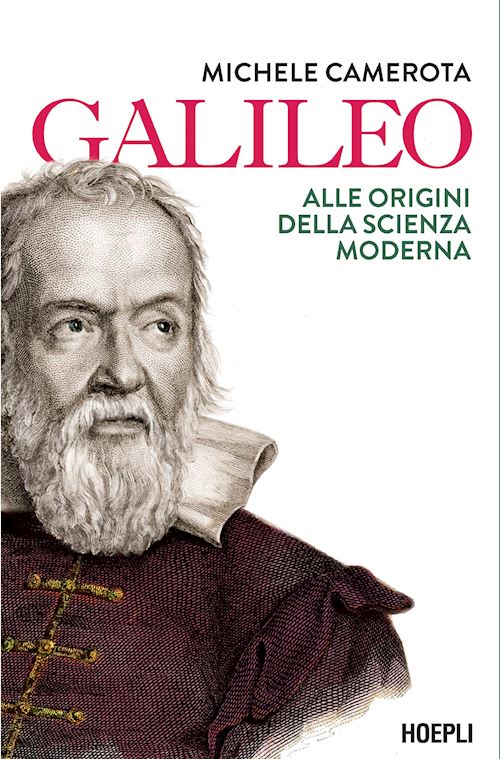
Michele Camerota
Galileo
At the Origins of Modern Science
-
- Overview
- The book at glance
- About the author
-
Michele Camerota
Galileo
At the Origins of Modern Science
- Overview
- The book at glance
- About the author
Overview
A biographical and intellectual journey through the life of Galileo Galilei, with attention to his troubled personal experiences, his conflict with the Church, and the development of his philosophical and scientific ideas.
The narrative aims to highlight the extraordinary historical significance of Galileo’s contributions: the importance of his thought lies not only in his astronomical or physical discoveries, but above all in his having addressed crucial aspects of modern culture, starting with the recognition of freedom of thought.
Galileo marked a radical break with the cultural orientation of tradition and, with admirable insight, theorized a decisive rejection of anthropocentrism and finalism, developing the idea of complete and effective transparency in the protocols and outcomes of scientific discoveries.
These innovative visions helped to build an ethos–a research culture that has become increasingly widespread and influential, eventually becoming an essential part of the values and sensibilities not only of the scientific world but also of the broader community of modern civil societies.
The book at glance
About the author
Michele Camerota teaches History of Science and Technology at the University of Cagliari. Among his publications: Il telescopio di Galileo (Einaudi, 2012, in collaboration with M. Bucciantini and F. Giudice); Galileo ritrovato. La lettera a Castelli del 21 dicembre 1613 (Morcelliana, 2019, in collaboration with F. Giudice and S. Ricciardo). With F. Giudice, he edited a new annotated edition of Galileo’s Il Saggiatore (Hoepli, 2023).
-
-
Book formats
Digital formats